Ads

Showing posts with label Better Gaming Bureau. Show all posts

Sunday, August 3, 2014

Preview: Shadowgate (2014, PC)


Shadowgate, originally made by ICOM Simulations, started life in 1987 on the Apple Macintosh and found its way to the NES in 1989 where it gained a cult following. It was innovative for the time with its first-person view point-and-click gameplay on a home console but never garnered a widely celebrated status, though it did have sequels on the TurboGrafx 16 and N64 as well as a newer port to the Game Boy/Game Boy Color. The story was you against the Warlock Lord as you sought to disrupt his plan to summon a demon that will destroy the world. As you made your way through Castle Shadowgate, filled with dungeons, traps, an occasional dragon, puzzles, and hidden areas, you wouldn’t find much of a sense of lore within the dark walls. The backstory was a generic medieval tale of ancient magic versus evil, but at the time that’s all you needed as a reason to make a game and go on an adventure. Jump to 2012 where original game creators Dave Marsh and Karl Roelofs have made their own studio, Zojoi, LLC, and have “re-imagined” Shadowgate for a new generation. Following a successful Kickstarter of over $137,000, they were able to reach at least one of their stretch goals which will let players adventure through a re-made Castle Shadowgate as well as a third tower that builds on the world’s previously barren lore.


While it didn’t create much lore in itself it still held a very mysterious atmosphere that was compelling and the new game will follow along the same lines with both old and new pathways; the same formula of puzzle-solving and dungeon-traversing as the original will remain with a few puzzles remade and many new ones added as well as some content that was cut from the original game. It will have 24 in-game achievements that also tie in to your Steam achievements, an original NES music mode, voice acting (so its not just music and sound effects all the time), three difficulty levels that change the game’s puzzles, and will most prominently feature amazing moving artwork by Chris Cold and Damian Audino.
If you’re a fan of old-school point-and-click games then this new Shadowgate is definitely something you’ll want to pay attention to; games of the point-and-click variety have been fading in the last few decades and most of them have moved to mobile devices at the cost of graphics and length. But even if you’re not a fan, you may enjoy the challenge that this game will offer and you might find it will be a nice change of pace from the repetitive titles of the current generations. Immersing yourself in the world of Tyragon, a place of magic and danger; conquering the puzzles of Castle Shadowgate and discovering the truth behind the Warlock Lord; and becoming the hero of a time-forgotten prophecy. That sounds a lot better than another military shooter.


You can pre-order Shadowgate from Zojoi’s website and there are three different tiers that offer an abundance of extras (and right now, each pre-order has a 25% discount, prices described are without the discount). The Wayfarer Tier, priced at a simple $19.99, gives you just a Steam key for either a Windows or Mac digital download. The Adventurer Tier, which is $24.99 includes the game and over two dozen wallpapers based on concept art, the Grim Reaper, and a collection of desktop wallpaper calendars. At $29.99, the Hero Tier includes the former as well as a 25-song orchestral soundtrack based on the NES score, a 60-page digital art book, digital map of the land of Kal Zathynn, a beta test release with an in-game tester credit, and a one-week early release of the full game.

Shadowgate will launch in late August. I have pre-ordered the Hero Tier and have already downloaded the wallpapers and soundtrack, the beta or full game isn’t available just yet but when I get my hands on it, expect a review.

 If you remember this screen, congratulations: you’re old. :-P

Monday, June 23, 2014

A Second Look @ Halo: Reach


Some people were skeptical of Halo: Reach even before its release but with good reason: it was Bungie’s last time working on the franchise and many fans thought their hearts wouldn’t be in it, causing it to fall short of living up to its fullest potential under the Halo name. The ending to Halo 3 left us all wanting more from the Master Chief and, with Reach being the third spin-off/side story game in a row, it didn’t get a lot of love due to many fans stepping away from the series after finding too many faults in ODST. In that case, they missed out on a piece of history in the Halo universe. Their fears would have been quickly brought to an end as the game proved it was more than capable of balancing the campaign story with multiplayer action all with great graphical fidelity, majestic music, and the best gameplay the series had ever seen.

Gone is the blandness of Master Chief and in his place are five Spartans, each with differing personalities and varying sets of skills, and yourself as the newly transferred Noble Six whose face is never seen (Its like being Master Chief but with the rank of Lieutenant). Before the first mission begins, you're informed by team leader Carter, callsign Noble One, that your days of acting as the lone wolf are at an end; you are part of a team now and must follow orders. You can once again rely on teammates with competent AI to have your back as you must also watch theirs. Starting the campaign, you are airlifted in to a farmstead near a satellite installation where communications have strangely gone dark. Thinking its insurrectionists, your team is prepared for a small arms firefight only to discover that the Covenant have reached planetside. And so begins the lengthy campaign with a compelling story, long areas to traverse and, in a later level, one very chaotic run through a long field of Covenant.


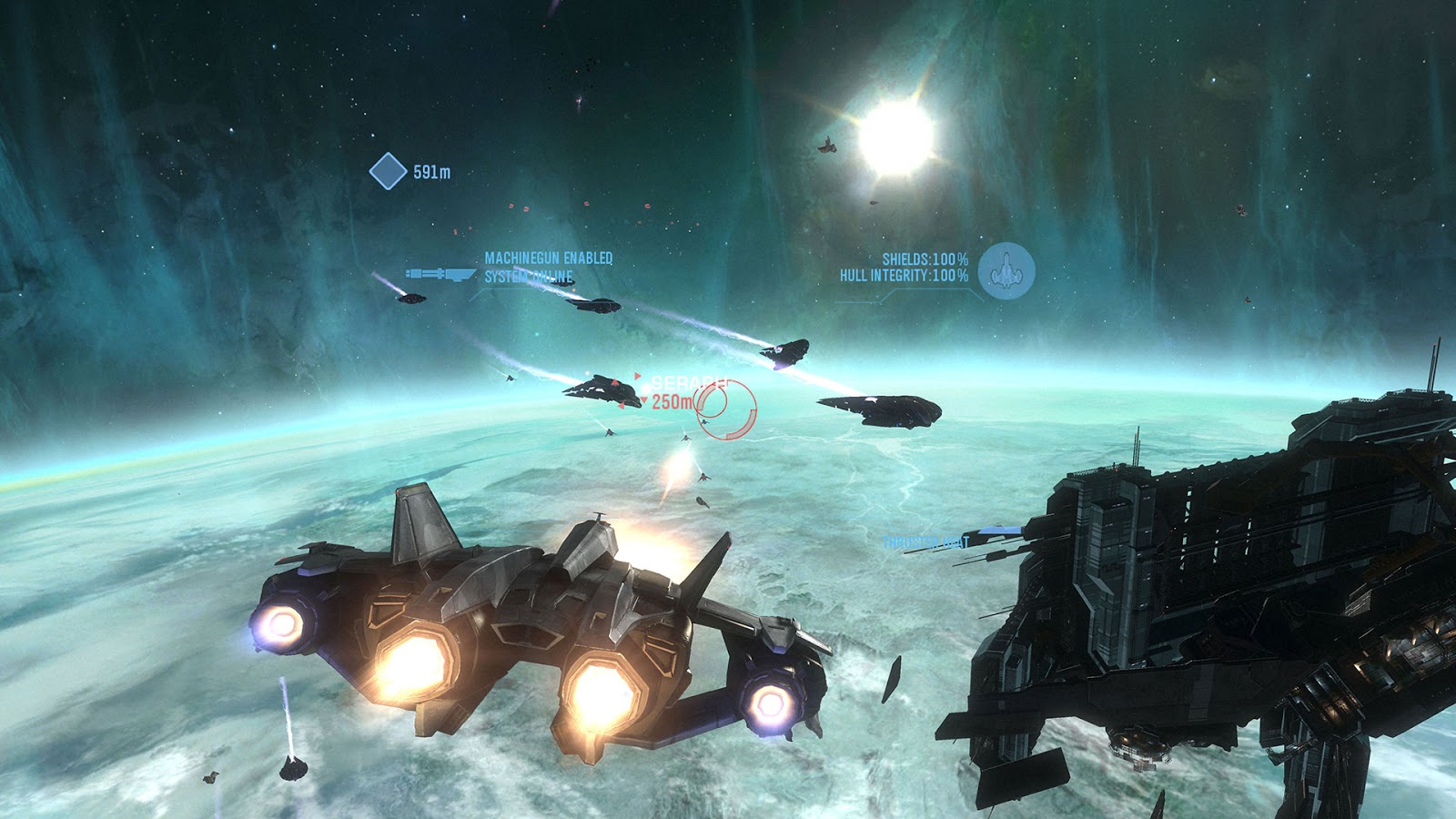
The campaign never feels tacked-on like in other FPS games, it's a whole and complete story which is as pulse-pounding, frustrating, rewarding, and unique as the other Halo titles, if not more. You feel the weight of an entire planet that's at risk of falling and you feel the hopelessness as the population is evacuated or slaughtered. Can you recall your first time taking control of the Falcon helicopter as you flew around the skies over New Alexandria? What went through your mind as you saw the E3 video of the space flight and you were finally able to take control of the Sabre to take the fight to Reach's atmosphere? If you read the Halo novels, how did you feel knowing that in the end Reach would be glassed by Covenant plasma? While the story isn't a ground-breaking work of fiction, what you play through is an integral part of the history of the Halo universe and serves as a good prequel to the first game.
You are no longer the bullet sponge as your teammates can take hit after hit without dying and are also as effective in firefights as much as you are. They can kill and react to situations and occasionally have banter, much like in ODST. Unfortunately relying on them matters little in the campaign as the most they do are follow you or take control of vehicle turrets and sometimes the vehicles themselves. Level exploration isn't really encouraged as only thirteen skulls are pre-unlocked with fan favorites such as Mythic, Grunt Birthday Party, and Catch making their return. Since there were no hidden items to collect this time around, it lends more thought on the focus of the game rather than hunting down Easter Eggs.  Making their first appearance in the series, Armor Abilities give you temporary enhancements such as a projected hologram, jet pack, armor lock, and even the ability to sprint a short distance. These simple tactical advantages can sometimes mean the difference between life or death on Hardcore and Legendary difficulties. At the same time, these can also play a big part in the multiplayer and can earn you some kills if used properly or cheap deaths if you find yourself on the receiving end.

Multiplayer consists of the usual Halo games and brings back ODST's Firefight mode, which is similar to Gears of War 2's Horde Mode wherein you fight wave after wave of oncoming enemies with increasing difficulty. Even today, if you can find several friends to play with, it can easily give you a dozen hours of entertainment with many adjustable rules that can make it a tough challenge from the start, and even the opportunity to play on the opposing team as a Covenant Elite. If Firefight doesn't sound appealing, playlists made of different maps and rules can be found as well the ability to section players off by how well they play or how much they talk. If all else fails, there's always the unique mode of Grifball. 


Spartan customization makes a return and offers more options this time around to make your character unique, allowing you to use the same design in both the campaign and multiplayer. These are only cosmetic and don't have any effect in the actual game; armor upgrades don't provide any more protection and ammo belts don't improve magazine capacities. With the Command Points credits system along with leveled ranks, dozens of hours will have to be spent in order to get the more unique and costly items such as a Mjolnir Mark IV helmet, Kat's robotic arm, or armor effects. A player with a high rank and unique armor parts is to be commended for having the patience and skill to obtain them, also avoided if you're anything below the rank of Major. 

Reach went beyond the usual themes of cramped human and alien space stations and underground caverns made of metal. While you do fight in a Covenant ship at one point, most of the game takes place outside along canyons with vast draw distances that lend to a grand sense of scale. Mountainous levels have blind corners and cliffs that can lead to an instant death if taken too hastily in a Warthog. New Alexandria, though wartorn, has a sense of a clean and futuristic city. Character designs, as well as their armors, are a welcome change from the Chief's standard Mjolnir equipment and the thought of using the same armor in campaign and multiplayer is one of the best ideas that Bungie has ever had. The vehicle designs are familiar and are just as easy to operate. Light blooms, fog, weather, and fantastic draw distances coupled with amazing environmental art give Reach a feeling of being alive and organic. Before Halo 4, it was the best looking game in the franchise.

As the game's story unfolds in small victories and huge defeats, the soundtrack collides sorrow with hope, action with solemnity, and mystery with the knowledge of how it will all end. The drums give a tribal feel while the orchestra and singers add to the ambitious overtone of the game. Marty O'Donnell and Michael Salvatori both show their talent by making the Reach soundtrack unique in many ways while still holding on to the essence of the past games. In one level, you'll hear a song that borrows notes from the original Halo theme. This should incite in you a feeling that you don't need to be Master Chief to be a Spartan. If you're one who enjoys collecting game memorabilia, the Halo: Reach soundtrack comes on two CDs, has bonus tracks, and is definitely one you will listen to several times. 
The voiceacting is superb but the lines of dialogue might wear a bit thin if you die and have to restart from a checkpoint. Each voice actor has brought their A-game and gives life to each character. From Carter's tone of leadership to Jorge's sympathy, each Spartan is given a personality behind the helmet; even your own Spartan sounds like an every day man/woman, making them feel more relatable.
Explosions and gunshots during firefights coupled with friendly and enemy banter make up the bulk of the game's sounds and with a wide variety of them they never seem to get old, but it seems the sound was given the backseat treatment in favor of the soundtrack as there's really not a lot of new things in comparison to the previous series entries.


Halo: Reach is the last great "Hurrah!" from Bungie and it shows that they put more effort into making a complete game than they have before. Each of the numbered Halo games seems to follow a central theme of discovery, not just along the lines of gameplay environments but more so in the Halo universe:
   *Halo CE is about the mystery of the first ring-world.
   *Halo 2 dealt with humanity's part in the grand scheme of things.
   *Halo 3 is about the deception of the Covenant.
   *Even Halo 4 is about uncovering more of the history of the Forerunners.
Reach takes a different path and chronicles the fall of the UNSC homeworld of Reach; the first and last bastion of military security for the human race falls in a very short amount of time. It doesn't need additional campaigns or massive amounts of DLC to complete the story. It gives a feeling of defeat at the end but a reassurance of hope. Its not the story of how Noble Team dies, but of your Spartan's heroic effort to ensure the safety of the most important person and AI in the Halo lore. As your teammates fall one-by-one, and as you fall in the end, Cortana reassures you that your sacrifice is not in vain. If not for your efforts, the AI never would have made it back* to Master Chief.
It's a thrill ride that leaves you wanting to see more of the vast landscapes and cities. You'll want to do more to help the population and fight the covenant. You'll want to battle online more to reach new ranks and prove you're damn good at it. You'll want more Spartans with personality. You'll want to hear more of the epic soundtrack. And in the end, you will be satisfied. If you missed Halo: Reach, you missed out on one of the best games in FPS history, and I stand by that wholeheartedly. 


(*In the Halo novel, Fall of Reach, Chief and Cortana ran a test exercise before being evacuated from the planet. Cortana was returned to Dr. Halsey while Master Chief was prepped for evac. Noble Team's mission was to get Cortana aboard the Pillar of Autumn in time.)